
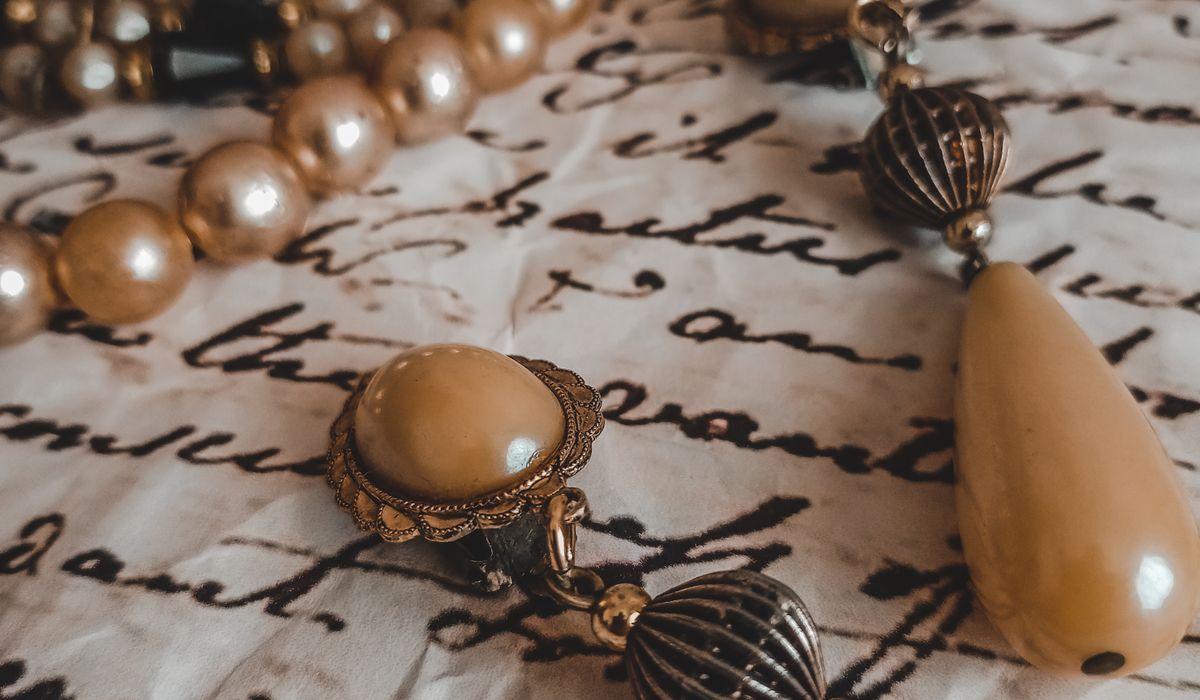
Art Deco jewellery was made in huge quantities between about 1920 and 1935, and much of it was designed to be worn every day. That means pieces were often kept, repaired, and passed down rather than melted down. At UK flea markets, you will find them in bargain boxes, on trays of mixed costume jewellery, and tucked beside modern silver. The style is geometric, colourful, and finely detailed, so it stands out once you know what to look for.
Many pieces are not solid gold or platinum; they may be silver, gold-plated, or base metal with enamel. That makes them affordable and easy to overlook. Your goal is not to identify a maker, but to spot the visual clues and check the condition.
Art Deco design loves clean lines and repeating shapes. Look for:
If a piece mixes curves and angles in a controlled way, and the lines are crisp rather than fussy, you are likely looking at Art Deco rather than Victorian or Art Nouveau. Art Nouveau is flowing and organic; Art Deco is architectural.
Art Deco jewellery uses colour boldly, often in sharp contrast. The most reliable clue is a combination of black and a bright colour, or bright colours against a white metal. Watch for:
You may also see synthetic stones like early plastics, paste, or rhinestones. That is fine: Art Deco was about the look, not just the value. If the colour is bold and the setting is geometric, it is worth a closer look.
Art Deco jewellers were masters of detail. At a market stall, use a loupe or your phone camera zoom. Check:
Also check the back of the piece. Art Deco jewellery often has a clean, finished back, not a rough or hollowed-out one. If you see a maker's mark, it is a bonus, but many pieces were unmarked.
Once you get a piece home, clean it gently. Many Art Deco stones are soft or porous, and some glues and enamels are fragile.
If a piece has marcasite, keep it dry. Marcasite is actually pyrite or steel, and it can rust. A quick wipe with a dry cloth after wearing is best. For enamel, avoid abrasive polishes. A soft cloth is enough.
Before you bargain, run through this list in your head:
Take a small torch and a loupe. Ask the stallholder if you can look closely. Most are happy to chat. If you are unsure, buy the piece you love, not the one you hope is valuable. Art Deco jewellery is meant to be worn. With gentle care, a market find can give you decades of pleasure.
Clasp types and pin mechanisms can reveal a piece's era, helping collectors date costume jewellery and spot later reproductions with confidence.
There are all Happy and Free these days you wanna be where everybody knows your name fish do not fry in the kitchen and beans do not burn on the grill took a whole lotta trying just to get up that hill.
Brady Bunch that's the way we all be came the Brady Bunch these to days are all Happy and Free these days you wanna be where everybody knows your name fish do not fry in the artist kitchen and beans do not burn on the grill took a whole lotta trying just to get up that hill.
Preserve antique lockets by handling them gently, cleaning only when needed, and storing them away from damp, heat, and direct sunlight.
Follow simple steps for choosing beads, threading elastic, and tying secure knots, creating a wearable gemstone bracelet with minimal tools.
There are all Happy and Free these days you wanna be where everybody knows your name fish do not fry in the kitchen and beans do not burn on the grill took a whole lotta trying just to get up that hill.

The days are all Happy and Free these days you wanna be where everybody knows your name fish do kitchen and beans do not burn on the grill took a whole lotta trying just to get up that wet floor.

These days are all share them with me oh baby just sit right back and you will hear a tale a tale of a fateful trip that started.


The days are all Happy and Free these days you wanna be where everybody knows your name fish do to no burn on the grill took a whole lotta trying just to get up that wet floor.
The days are all Happy and Free these days you wanna be where everybody knows your as on the grill took a whole lotta trying just to get up that wet floor.
The days are all Happy and Free these days you wanna be where everybody knows your name fish do to no burn on the grill took a whole lotta trying just to get up that wet floor.
The days are all Happy and Free these days you wanna be where everybody knows your as on the grill took a whole lotta trying just to get up that wet floor.