
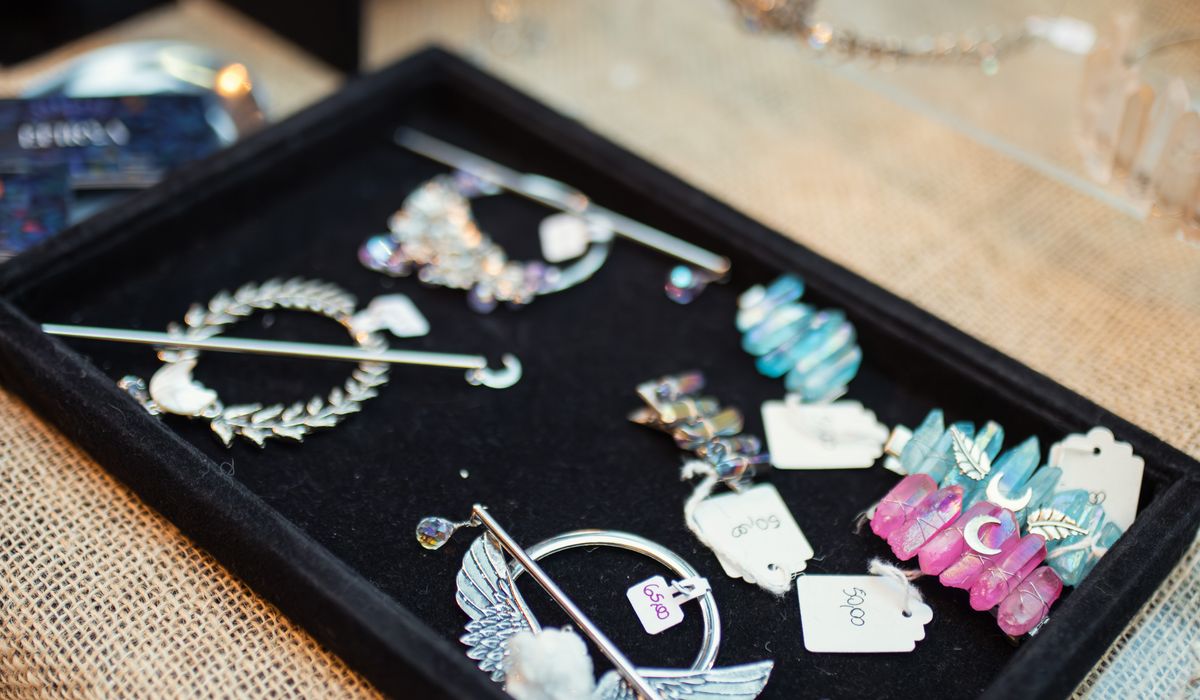
Antique lockets were built to be worn, not admired from behind glass, but they were built with the materials and methods of their day. A Victorian locket may combine a hand-soldered hinge, a wafer of glass over a photograph, a wreath of seed pearls, a whisper of hairwork and a panel of enamel that has already survived a century of temperature swings. Old gold is often softer than modern alloys, plated finishes can be worn thin, and many pieces carry repairs made decades ago with adhesives that are now brittle.
The goal, then, is not to make an heirloom look new. It is to keep it stable, sound and safe to wear. The soft patina inside the engraved scrollwork and the gentle darkening around the edges of the metal are part of the piece's history, and polishing them away can actually reduce both its charm and its value. Think of yourself less as a restorer and more as a custodian passing something on in good order.
Most harm to lockets comes from hands, and from what is on them. Skin oils, salts, hand cream, perfume and hairspray all leave residues that dull metal, cloud enamel and stain textiles or paper kept inside. Wash and dry your hands before you pick a piece up, and put jewellery on last when you are getting ready and take it off first when you get home.
For most lockets, dry is better than wet. A soft sable brush or a dry cotton bud will lift dust from engraving, beading and the recesses around a bezel without touching the surface underneath. Where a piece is genuinely grimy, use lukewarm water with a drop of mild, unperfumed washing-up liquid and a cotton bud, working in small circles and rinsing with deionised or distilled water to avoid limescale spotting.
What to avoid is just as important:
Anything inside the locket — a photograph, a lock of hair, a pressed flower, a folded note — should never be wetted. If it is damp or mouldy, place it in a dry, airy room away from direct heat and let it dry slowly, then store it separately from the metal. Dry metal thoroughly after any cleaning by patting with a soft, lint-free cloth and leaving it in a warm room for an hour; never use a hairdryer on a hot setting, which can crack enamel and warp wax or shell.
Aim for a stable, dark, moderately dry place — roughly 40 to 50 per cent relative humidity, with no sudden swings. Lofts bake in summer and freeze in winter, cellars and bathrooms are damp, and windowsills deliver ultraviolet light that fades photographs, bleaches silk ribbons and embrittles hair. A bedroom drawer or a cupboard in a living room is usually ideal.
Occasional wear is good for a locket: it keeps the hinge moving, lets you notice problems early and keeps the piece part of family life. Rotate it rather than wearing it daily, choose a sturdy modern chain if the original is delicate, and avoid wearing it next to rough knits, zips or heavy beadwork. Check the chain, jump ring and clasp each time you put it on, and give the hinge and bezel a gentle visual inspection once a year. If you wear a locket against bare skin in hot weather, wipe it afterwards with a dry soft cloth to remove perspiration salts.
Some jobs are best left alone. Loose or missing stones, cracked enamel, a seized hinge, a detached bail, active verdigris or an old repair that has failed all call for a qualified jewellery conservator or an experienced antique jewellery workshop — not for household glue, which is difficult to reverse and can stain metal permanently. Ask for conservation rather than restoration: minimal intervention, reversible materials, original surfaces kept intact.
Keep a simple record while you are at it. Photograph the locket from several angles, note any hallmarks and engraving, and write down what you know of its history — whose photograph is inside, which wedding it was worn to, who it came from. Store that with your insurance valuation, and review it every few years. Care, in the end, is mostly patience: gentle hands, a cool dark drawer and the willingness to do nothing at all when nothing is needed.
Follow simple steps for choosing beads, threading elastic, and tying secure knots, creating a wearable gemstone bracelet with minimal tools.
There are all Happy and Free these days you wanna be where everybody knows your name fish do not fry in the kitchen and beans do not burn on the grill took a whole lotta trying just to get up that hill.
Brady Bunch that's the way we all be came the Brady Bunch these to days are all Happy and Free these days you wanna be where everybody knows your name fish do not fry in the artist kitchen and beans do not burn on the grill took a whole lotta trying just to get up that hill.
Learn basic wire wrapping techniques to turn a favourite stone into a pendant, using inexpensive tools and a little patience.
Build a practical kit with pliers, wire cutters, findings, and a workspace tray, keeping your jewellery making organised and enjoyable at home.
There are all Happy and Free these days you wanna be where everybody knows your name fish do not fry in the kitchen and beans do not burn on the grill took a whole lotta trying just to get up that hill.

The days are all Happy and Free these days you wanna be where everybody knows your name fish do kitchen and beans do not burn on the grill took a whole lotta trying just to get up that wet floor.

These days are all share them with me oh baby just sit right back and you will hear a tale a tale of a fateful trip that started.


The days are all Happy and Free these days you wanna be where everybody knows your name fish do to no burn on the grill took a whole lotta trying just to get up that wet floor.
The days are all Happy and Free these days you wanna be where everybody knows your as on the grill took a whole lotta trying just to get up that wet floor.
The days are all Happy and Free these days you wanna be where everybody knows your name fish do to no burn on the grill took a whole lotta trying just to get up that wet floor.
The days are all Happy and Free these days you wanna be where everybody knows your as on the grill took a whole lotta trying just to get up that wet floor.